Proximus – Gateway Platform Transition to the Cloud

Designing a user-centered experience for everyday users, technicians, and operators in the shift from physical BBOX to cloud services.

Role

UX/UI Designer

Scope

Cloud Platform Transformation (Telecommunications)
a cell phone on a table

Stage 1. User Research

Conducted research across three distinct user groups:

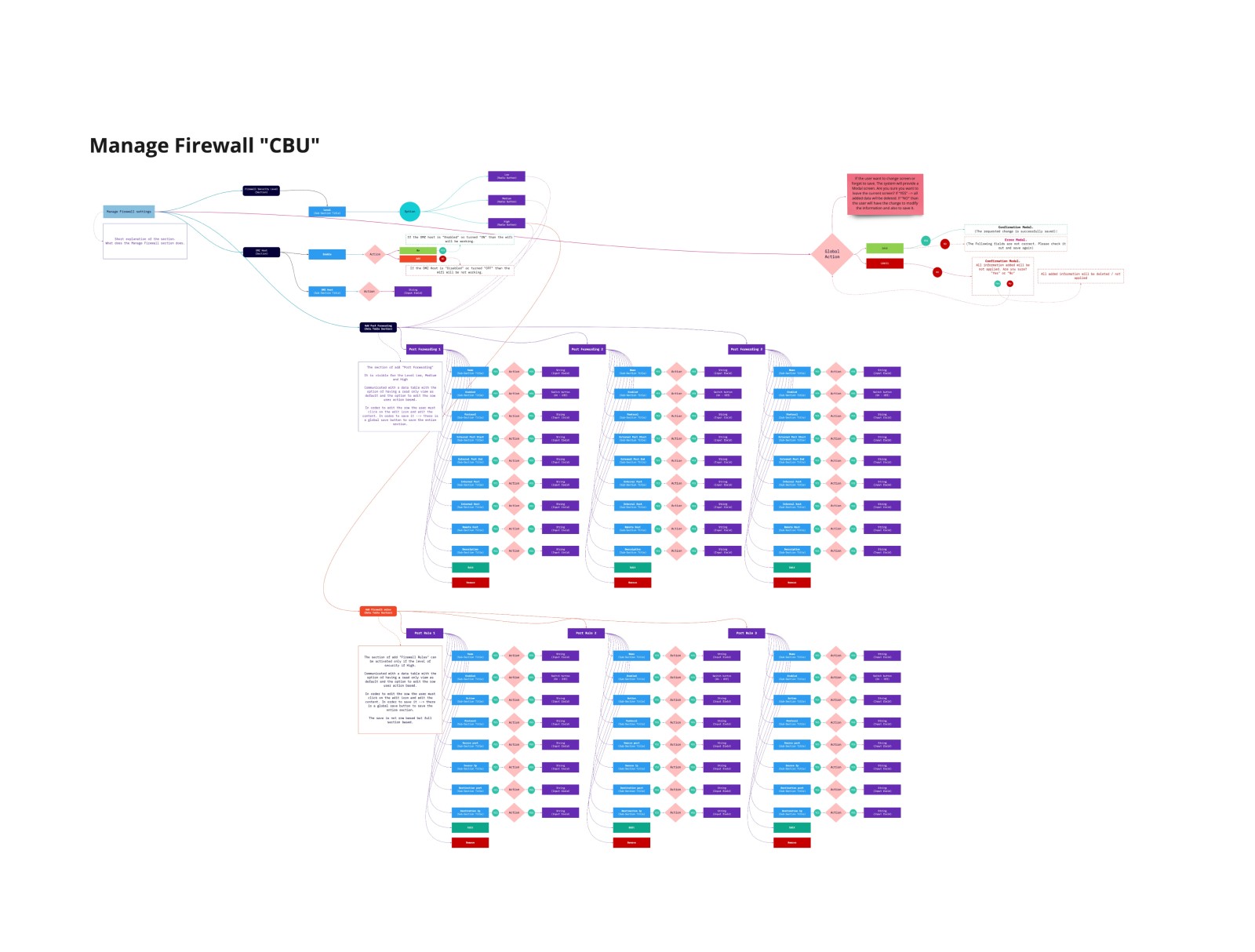
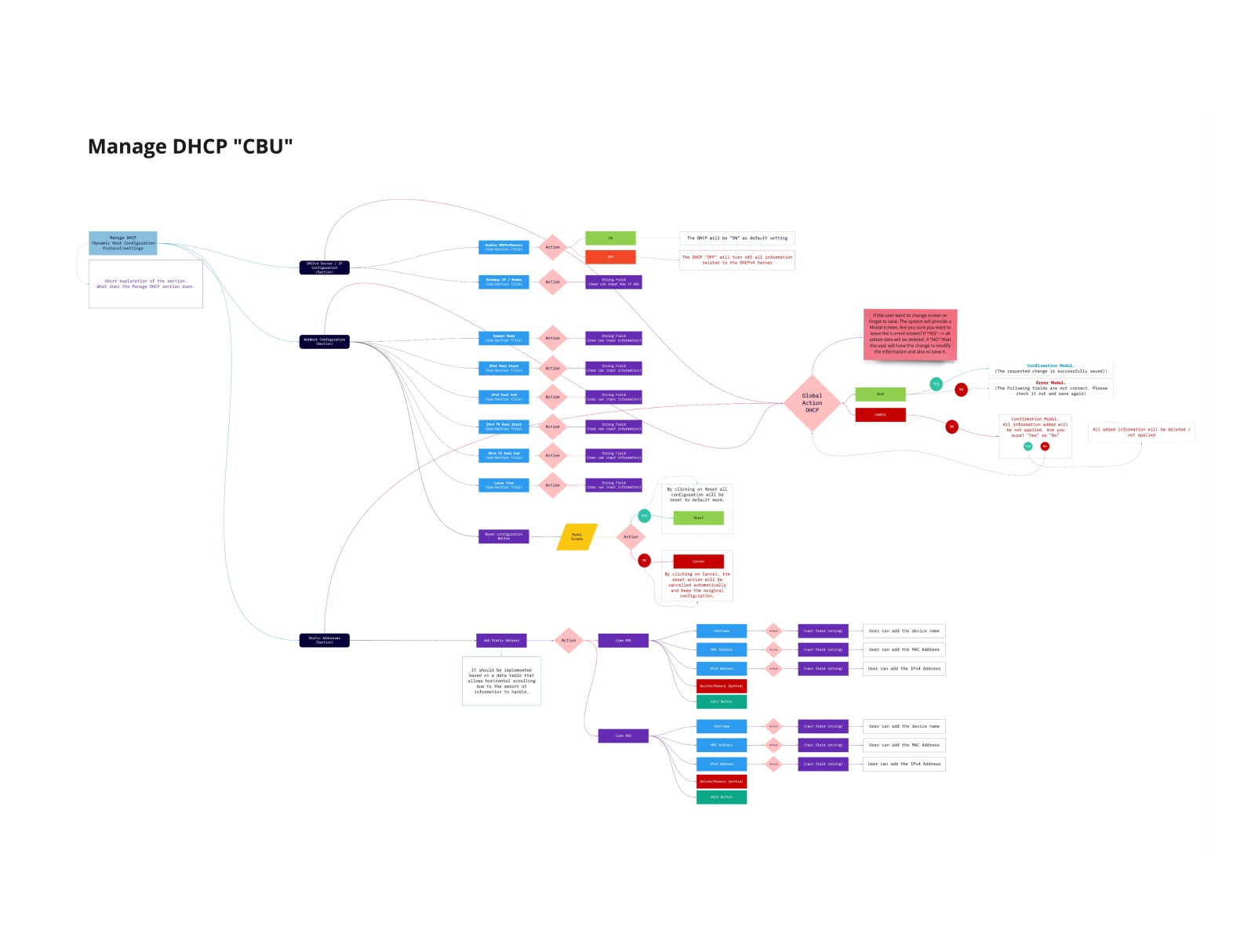
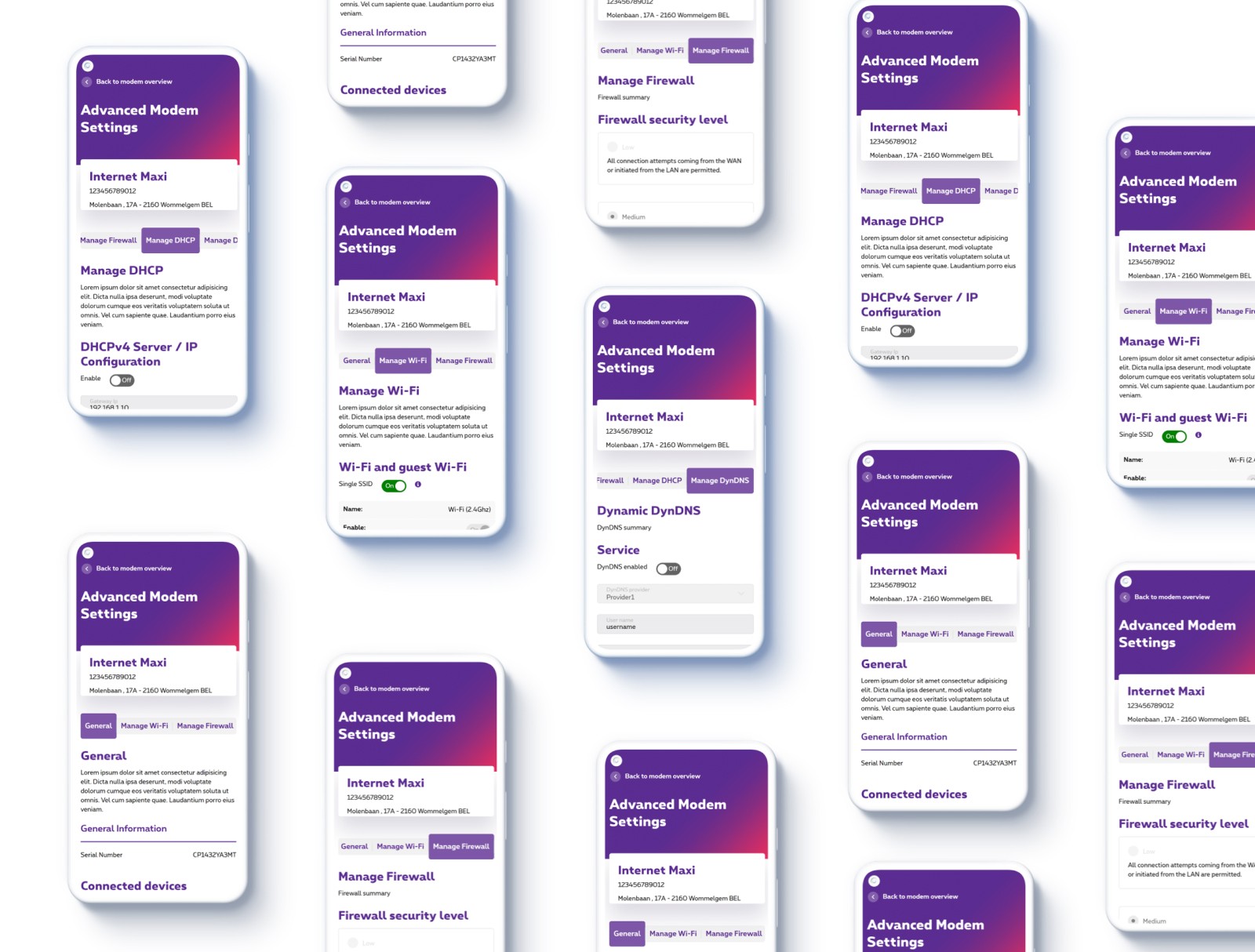
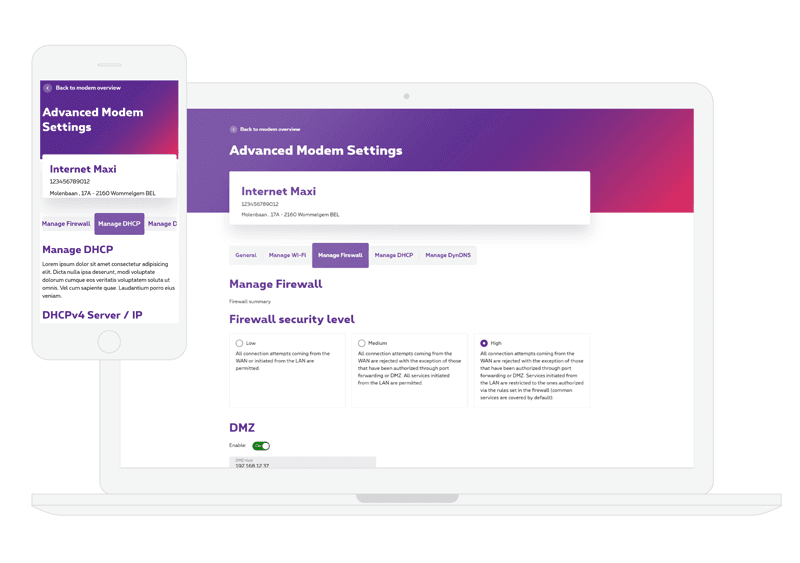
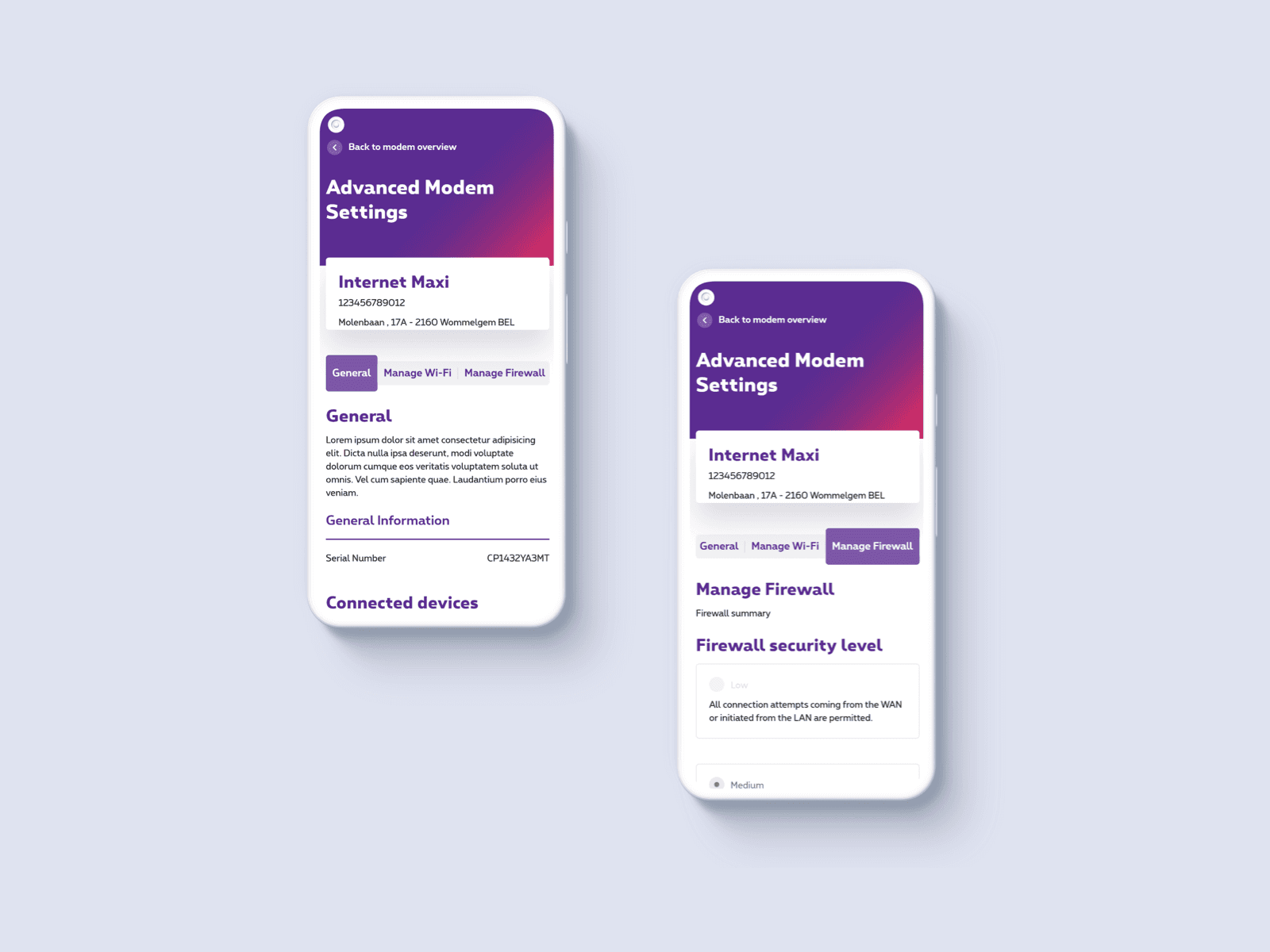
  • Regular users, who needed to manage Wi-Fi, firewall, and remote access in a simple, intuitive way.

  • Technicians, who required robust tools for installation, troubleshooting, and advanced configurations.

  • Operators, responsible for monitoring and ensuring overall system stability.

Methods included workflow analysis, and benchmarking of existing solutions. Findings revealed the importance of:

  • Remote access (e.g., setting up Wi-Fi even while abroad).

  • Clear distinction between simple and advanced settings to avoid overwhelming regular users.

  • Consistency and speed across all user types to improve efficiency.

Stage 2. Ideation & Conceptualization

Led cross-functional ideation to define role-based user journeys, balancing simplicity for everyday users with advanced control for technicians and operators.

Aligned product flows around remote access, progressive disclosure, and operational monitoring to support the transition from physical hardware to cloud services.

Stage 3. Design Execution

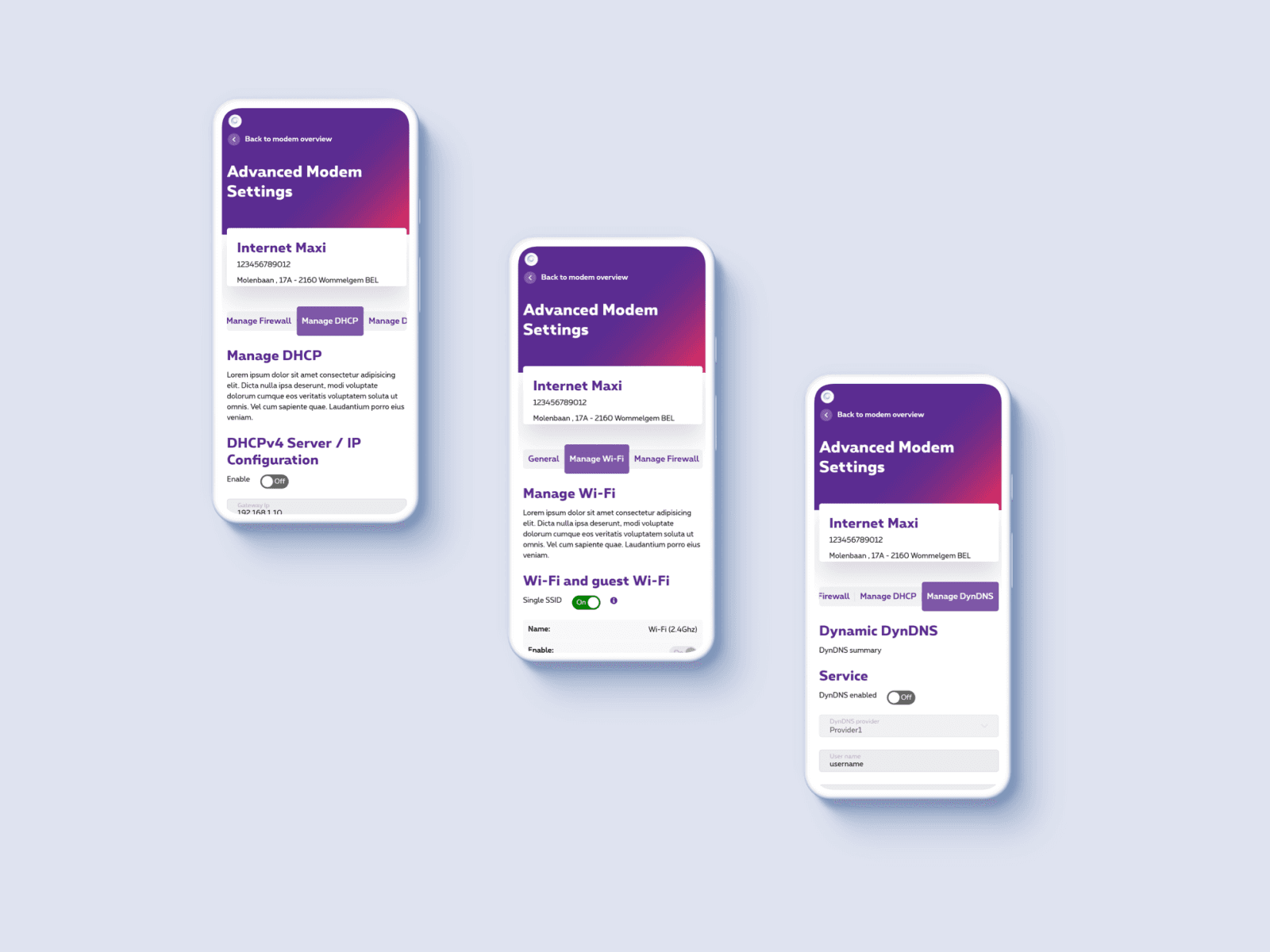
Designed and validated end-to-end cloud-based workflows for configuration, troubleshooting, and monitoring across user roles.

Prototypes reduced complexity through progressive disclosure and guided steps, enabling confident remote management of network services.


Stage 1. User Research

Conducted research across three distinct user groups:

  • Regular users, who needed to manage Wi-Fi, firewall, and remote access in a simple, intuitive way.

  • Technicians, who required robust tools for installation, troubleshooting, and advanced configurations.

  • Operators, responsible for monitoring and ensuring overall system stability.

Methods included workflow analysis, and benchmarking of existing solutions. Findings revealed the importance of:

  • Remote access (e.g., setting up Wi-Fi even while abroad).

  • Clear distinction between simple and advanced settings to avoid overwhelming regular users.

  • Consistency and speed across all user types to improve efficiency.

Stage 2. Ideation & Conceptualization

Led cross-functional ideation to define role-based user journeys, balancing simplicity for everyday users with advanced control for technicians and operators.

Aligned product flows around remote access, progressive disclosure, and operational monitoring to support the transition from physical hardware to cloud services.

Stage 3. Design Execution

Designed and validated end-to-end cloud-based workflows for configuration, troubleshooting, and monitoring across user roles.

Prototypes reduced complexity through progressive disclosure and guided steps, enabling confident remote management of network services.


a cell phone on a white block
two cell phones on a gray surface

Stage 4. User Testing & Iterations

Iterative testing across user roles refined navigation clarity, multi-step processes, and status feedback, ensuring the platform was usable for non-technical users while remaining efficient for expert operators.

Stage 5. Final Presentation and Documentation

Delivered comprehensive documentation and implementation guidance enabling engineering and operations teams to scale, maintain, and evolve the cloud platform.
a cell phone leaning on a ledge
a pair of cell phones on a concrete block
a cell phone with a yellow rectangular screen

Outcome

The new cloud-based platform replaced the physical BBOX with a streamlined, accessible solution that allowed users to configure and manage their services anywhere, anytime. Regular users benefited from simplified Wi-Fi and firewall management, while technicians and operators gained efficient tools tailored to their advanced needs. The result was a future-proof, scalable platform improving both customer satisfaction and operational efficiency.

Outcome

The new cloud-based platform replaced the physical BBOX with a streamlined, accessible solution that allowed users to configure and manage their services anywhere, anytime. Regular users benefited from simplified Wi-Fi and firewall management, while technicians and operators gained efficient tools tailored to their advanced needs. The result was a future-proof, scalable platform improving both customer satisfaction and operational efficiency.

Other projects

Copyright 2025 by Chemss Salem

Copyright 2025 by Chemss Salem

Copyright 2025 by Chemss Salem