European Investment Bank – Internal Digital Transformation Platform & Design System

Consolidating 11+ mission-critical internal platforms into a unified, compliant, and scalable digital foundation for Europe’s leading financial institution.

Role

Lead Product Designer & UX Researcher

Scope

Internal platform convergence, design system strategy, cross-department alignment.
a cell phone on a bench

Stage 1. Research & Organizational Diagnosis

Engaged with stakeholders and internal users across departments to understand how employees navigated a fragmented ecosystem of legacy platforms (ASAPP, NOW, MMS, CALMS, GCAPP, Client Connect, RaSa, and others).

Research methods included interviews, surveys, and task analysis, focusing on workflow fragmentation, operational inefficiencies, and regulatory constraints governing sensitive financial data.

Insights revealed structural risks related to duplicated effort, inconsistent interaction models, and compliance exposure, highlighting the need for unified workflows, consistent design patterns, and a secure, regulation-first experience.

Stage 2. Experience Strategy & Platform Convergence

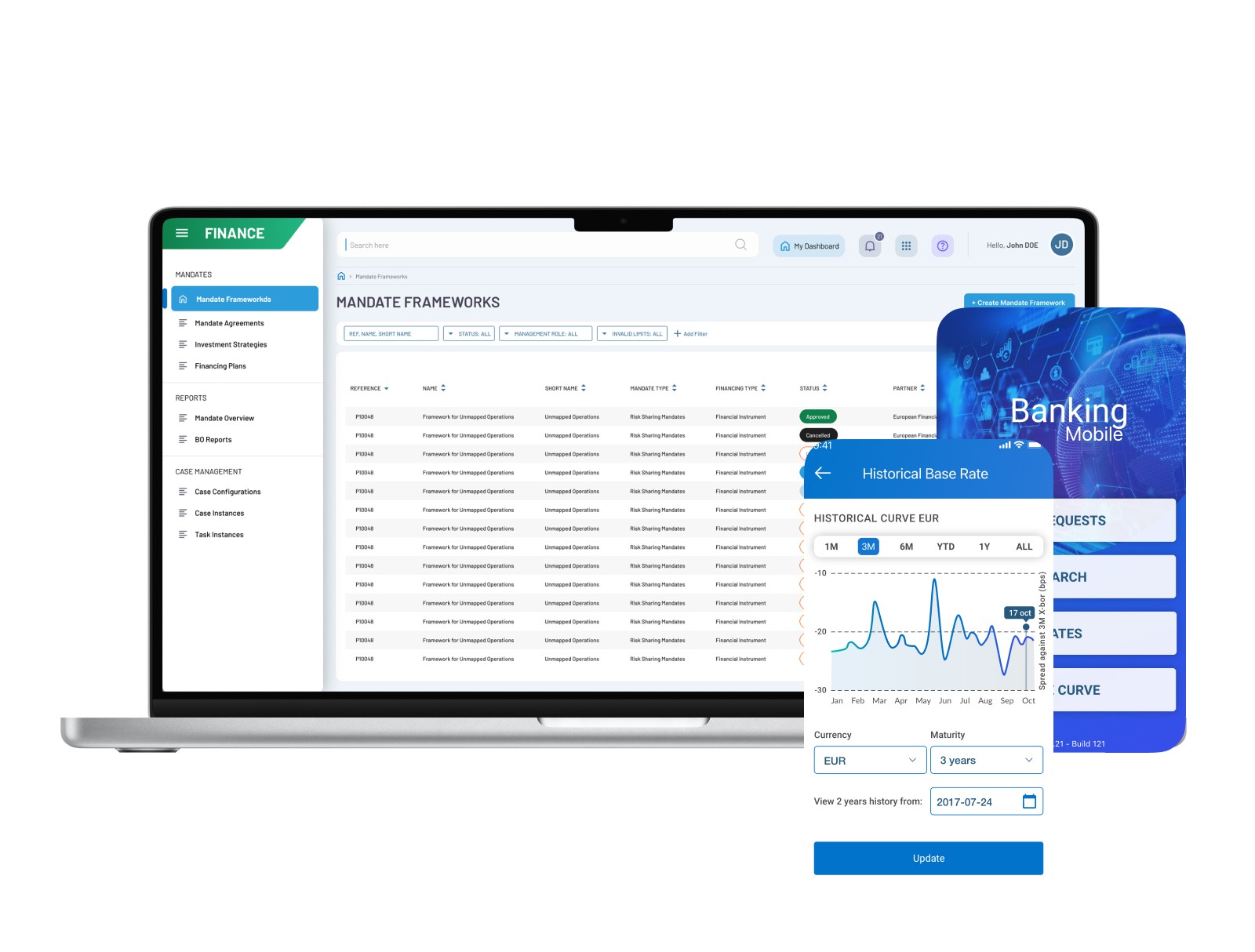
Defined end-to-end user flows that converged core tasks across 11 internal platforms into a coherent system. Facilitated cross-department workshops to align operational, analytical, and back-office needs while preserving role-specific requirements.

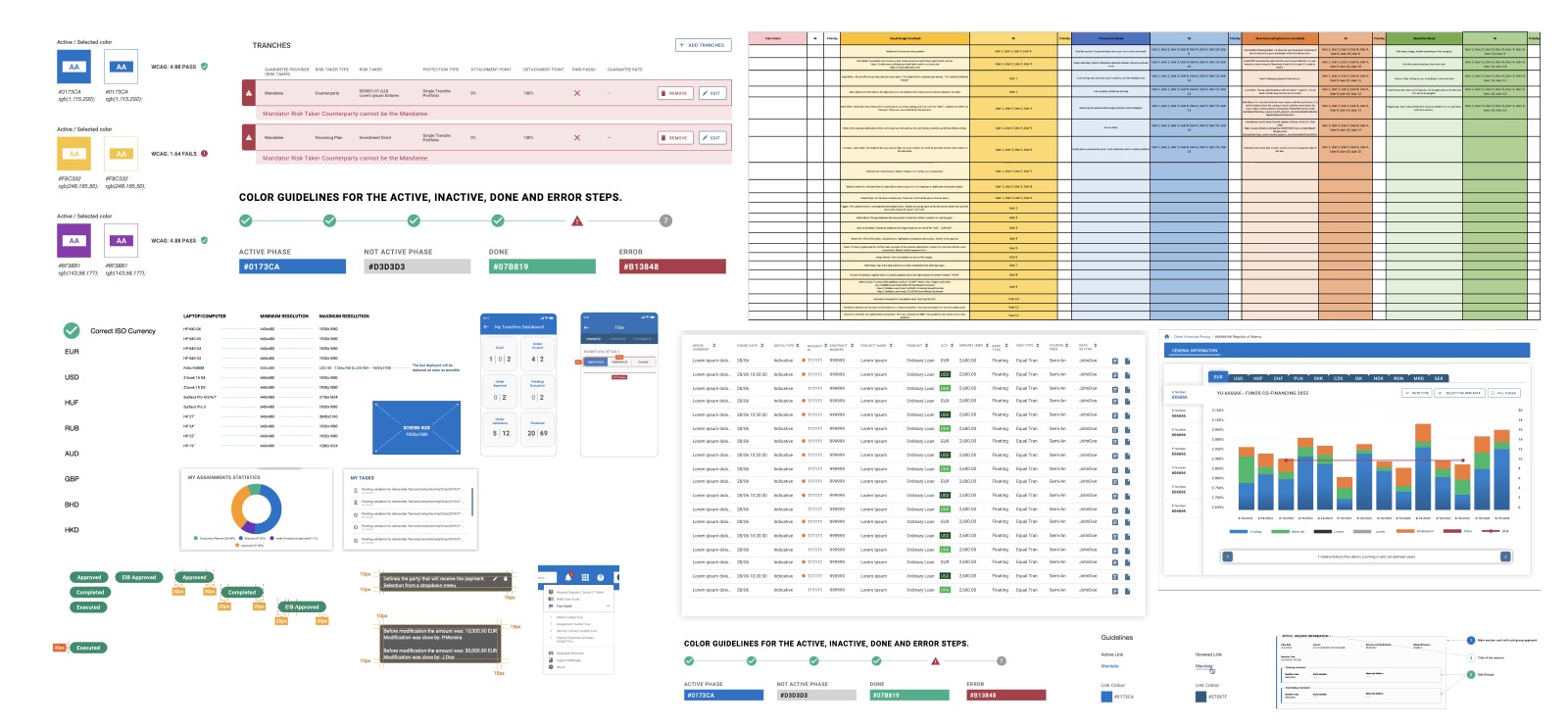
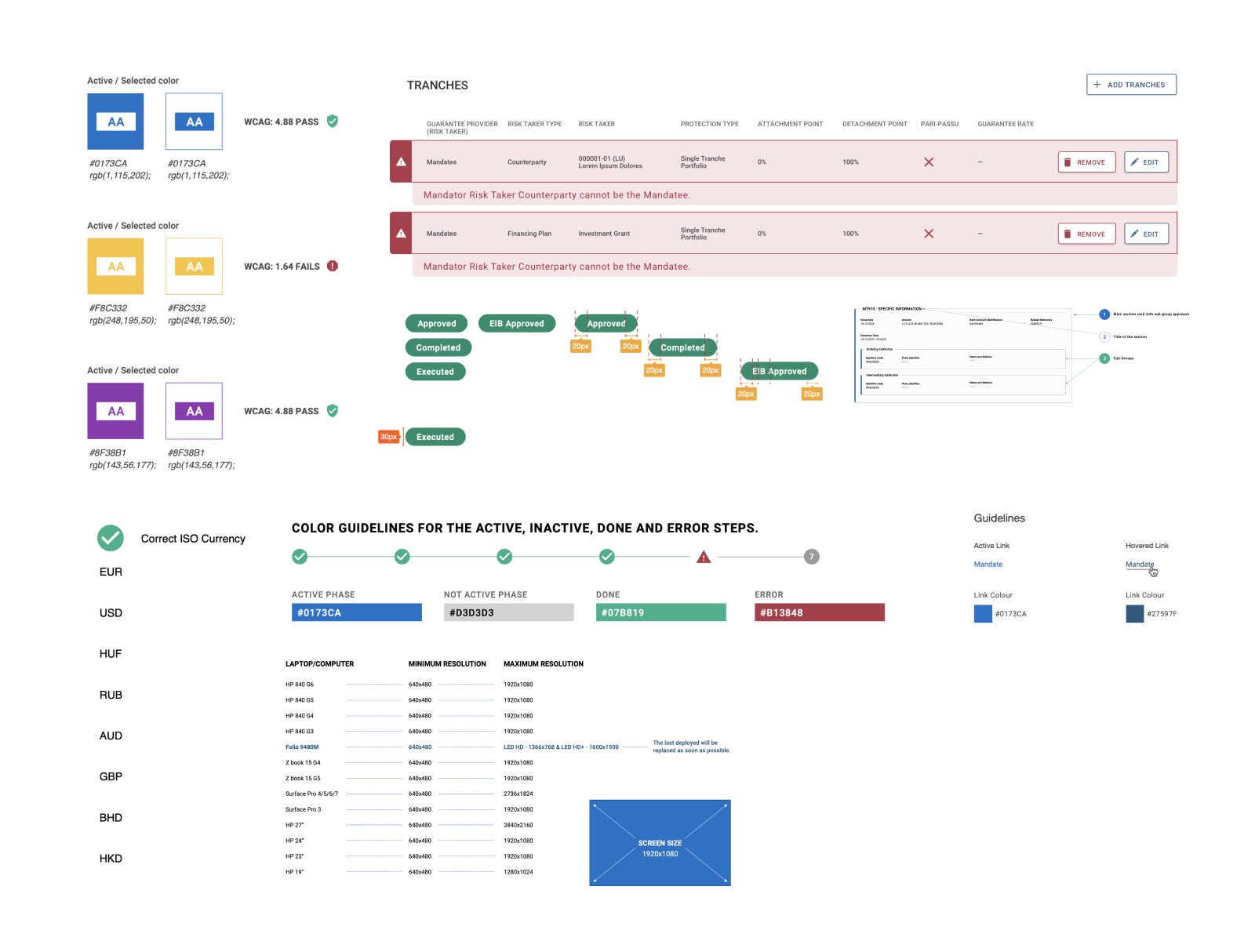
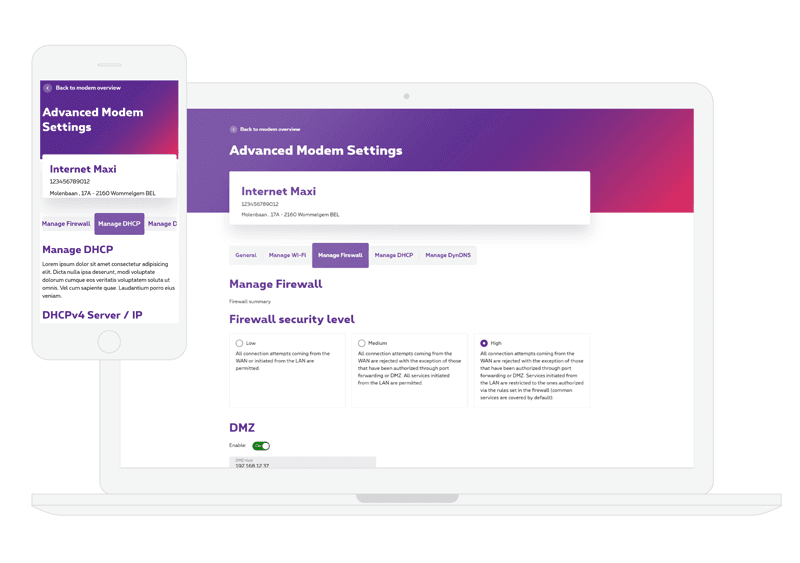
In parallel, established the strategic foundation of a centralized design system defining reusable components, interaction principles, and accessibility standards to ensure consistency, scalability, and regulatory compliance across all banking applications.

This reframing positions you as shaping organizational infrastructure, not screens.

Stage 3. Design Execution & Systemization

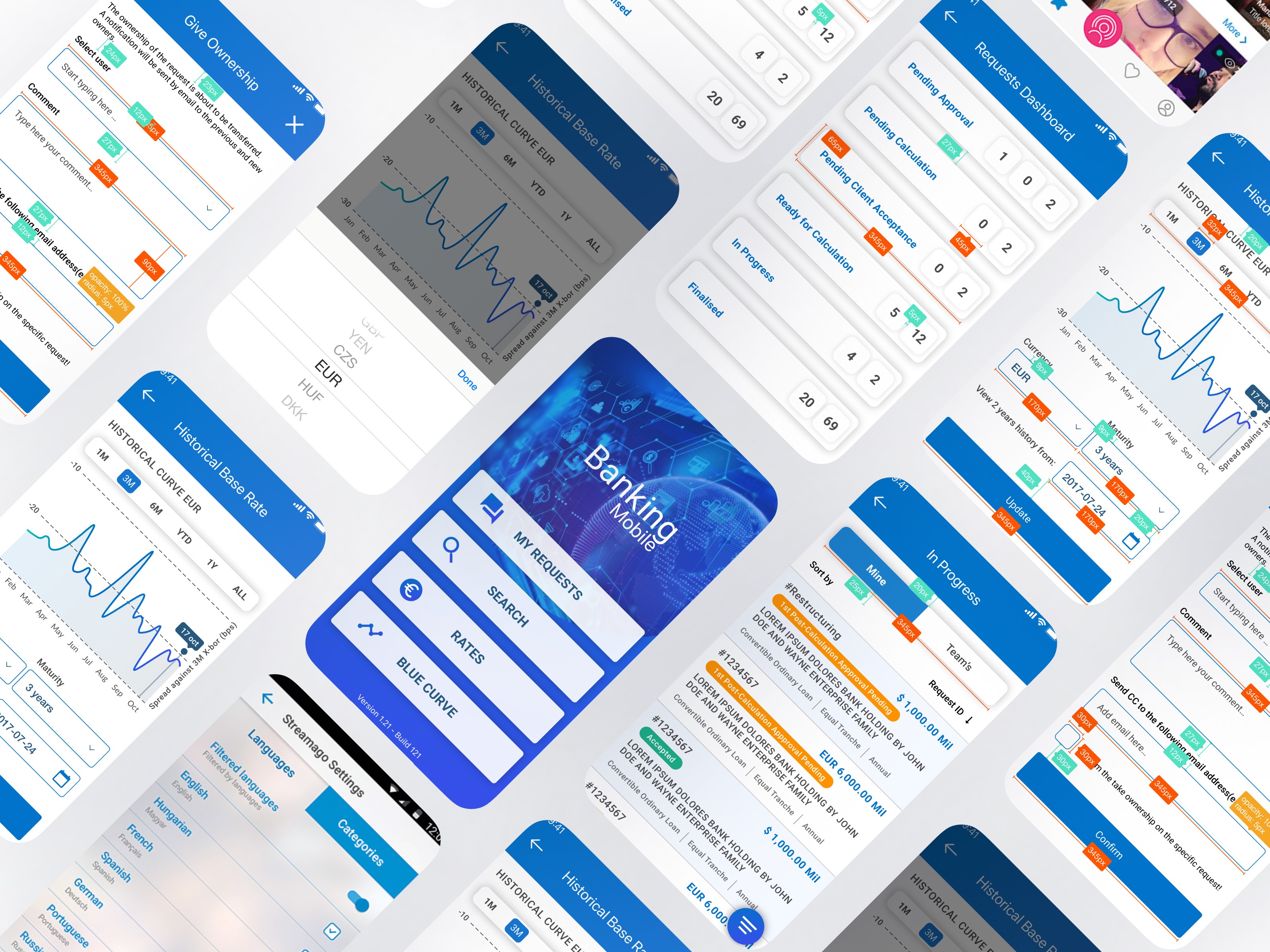
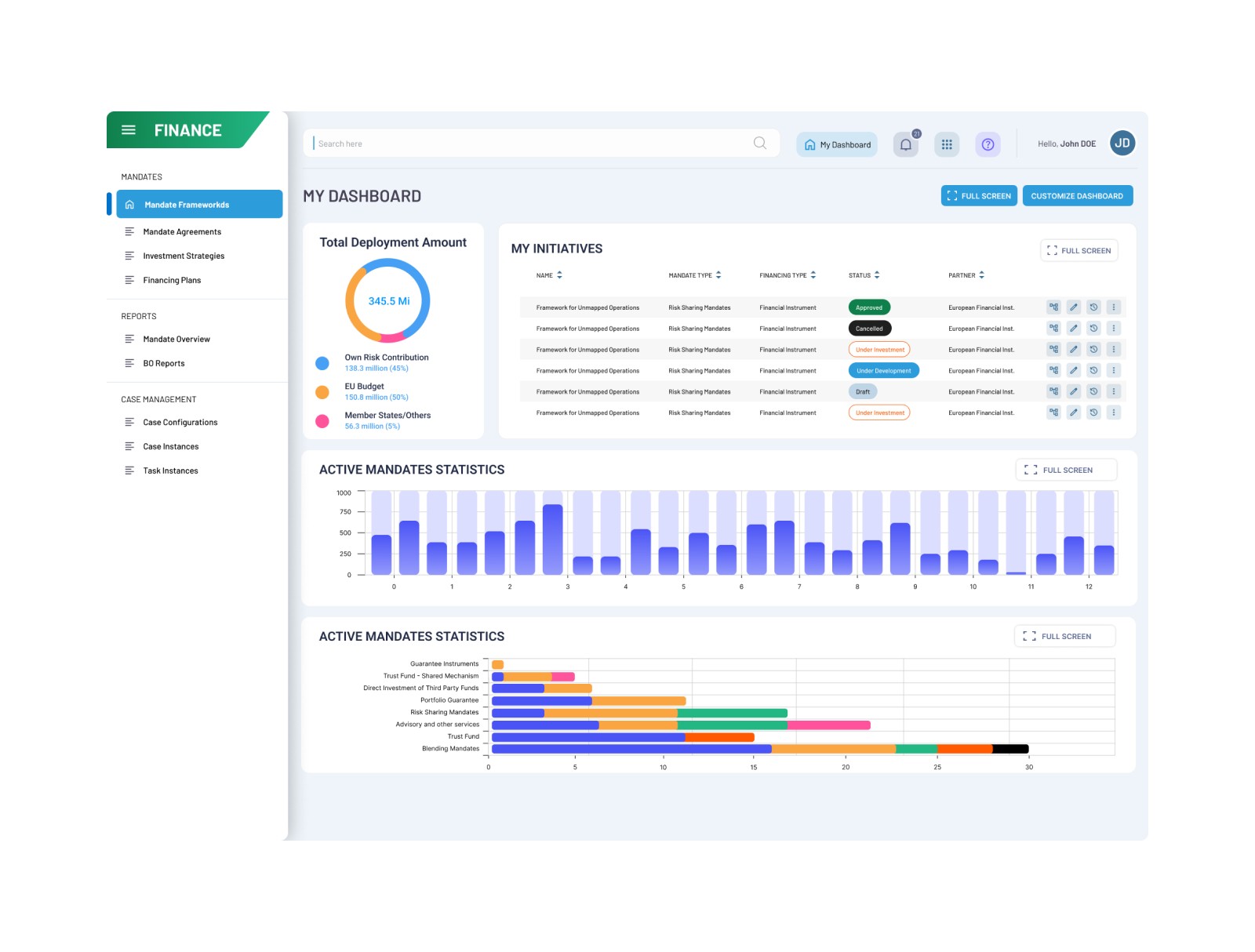
Designed unified task flows supporting critical operations from transaction approvals to financial reporting, ensuring clarity and consistency across platforms. Prototypes enabled stakeholders to evaluate simplified workflows and validate convergence strategies before large-scale implementation.

Developed the EIB Design System as a centralized, compliance-aware framework optimizing components for complex, data-intensive use cases while embedding accessibility, performance, and security requirements into the system’s core.

Stage 1. Research & Organizational Diagnosis

Engaged with stakeholders and internal users across departments to understand how employees navigated a fragmented ecosystem of legacy platforms (ASAPP, NOW, MMS, CALMS, GCAPP, Client Connect, RaSa, and others).

Research methods included interviews, surveys, and task analysis, focusing on workflow fragmentation, operational inefficiencies, and regulatory constraints governing sensitive financial data.

Insights revealed structural risks related to duplicated effort, inconsistent interaction models, and compliance exposure, highlighting the need for unified workflows, consistent design patterns, and a secure, regulation-first experience.

Stage 2. Experience Strategy & Platform Convergence

Defined end-to-end user flows that converged core tasks across 11 internal platforms into a coherent system. Facilitated cross-department workshops to align operational, analytical, and back-office needs while preserving role-specific requirements.

In parallel, established the strategic foundation of a centralized design system defining reusable components, interaction principles, and accessibility standards to ensure consistency, scalability, and regulatory compliance across all banking applications.

This reframing positions you as shaping organizational infrastructure, not screens.

Stage 3. Design Execution & Systemization

Designed unified task flows supporting critical operations from transaction approvals to financial reporting, ensuring clarity and consistency across platforms. Prototypes enabled stakeholders to evaluate simplified workflows and validate convergence strategies before large-scale implementation.

Developed the EIB Design System as a centralized, compliance-aware framework optimizing components for complex, data-intensive use cases while embedding accessibility, performance, and security requirements into the system’s core.

a cell phone on a bench
a cell phone on a ledge

Stage 4. Validation, Iteration & Risk Management

Usability testing confirmed that consistency introduced by the design system significantly reduced cognitive load and training needs. Testing also highlighted the necessity of step-by-step guidance and clear status indicators for complex financial workflows.

Iterations focused on improving navigational clarity across converged systems, strengthening feedback for compliance-critical actions, and ensuring accessibility and inclusivity across all internal tools-balancing efficiency with regulatory rigor.

Stage 5. Enablement & Long-Term Adoption

Delivered a comprehensive set of assets-including unified journeys, annotated prototypes, usability findings, and a fully documented design system-enabling teams to adopt, extend, and govern the system over time. These deliverables supported both immediate implementation and long-term scalability across the organization.
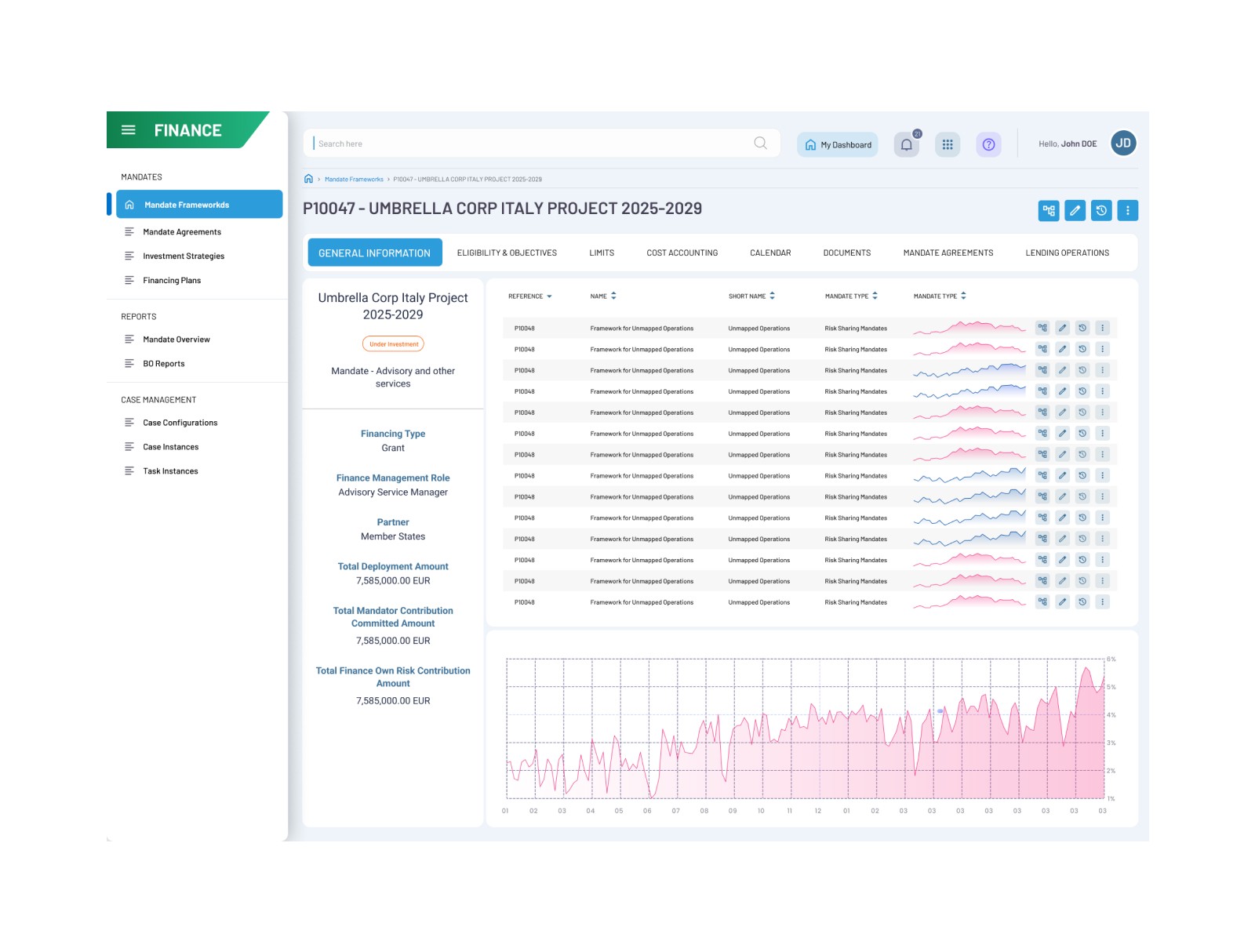
a cell phone leaning on a ledge
a pair of cell phones on a concrete block
a cell phone on a table

Outcomes & Organizational Impact

The initiative resulted in a scalable design system and a set of unified workflows that fundamentally changed how employees interact with the bank’s internal tools. By consolidating 11+ critical platforms into a consistent experience, the EIB reduced operational complexity, improved usability across departments, and strengthened regulatory alignment.

Most importantly, the program established a durable digital foundation enabling ongoing transformation, faster product evolution, and consistent quality across future internal applications.

Outcomes & Organizational Impact

The initiative resulted in a scalable design system and a set of unified workflows that fundamentally changed how employees interact with the bank’s internal tools. By consolidating 11+ critical platforms into a consistent experience, the EIB reduced operational complexity, improved usability across departments, and strengthened regulatory alignment.

Most importantly, the program established a durable digital foundation enabling ongoing transformation, faster product evolution, and consistent quality across future internal applications.

Other projects

Copyright 2025 by Chemss Salem

Copyright 2025 by Chemss Salem

Copyright 2025 by Chemss Salem